
AI Therapy vs Real Therapist: I'm a Vancouver Therapist, So I Tried Therapy With AI
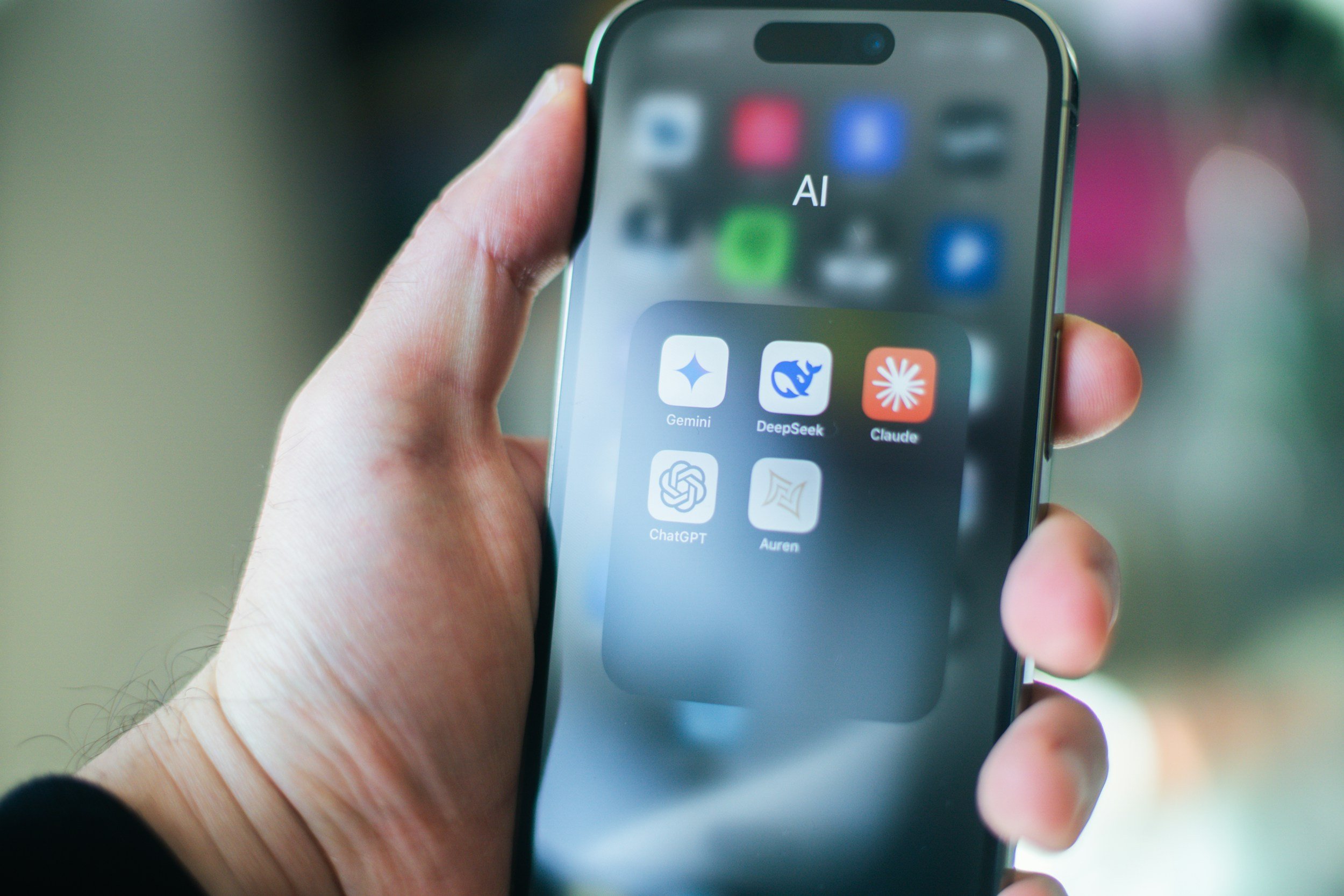
Talking through emotions is now one of the most common things people do with AI.
A 2025 Harvard Business Review analysis found that the single top use of generative AI was as a "therapist or companion" (Zao-Sanders, 2025).
A KFF poll found that 16% of adults had turned to AI chatbots for mental health support in the past year (WBUR, 2026).
And honestly? I understand why. Therapy in Vancouver is expensive, waitlists are long, and ChatGPT is free and awake at 3 a.m.
So instead of forming an opinion from the sidelines, I decided to find out for myself. For one week, I used an AI chatbot the way someone might use a therapist, bringing it my own real stresses, asking it for support, and seeing what it gave back. Here's what I learned about AI therapy vs a real therapist, as someone who sits in the therapist's chair for a living.
A note on confidentiality before I begin: everything I shared with the chatbot during this experiment was drawn from my own life. No client information is ever entered into an AI tool. This is a non-negotiable professional and ethical boundary, and one you should expect from any therapist you work with.
What the AI got right (and it got more right than I expected)
I want to be fair here, because dismissing AI entirely would be unfair to the people finding real comfort in it.
It was available the moment I needed it. No booking, no waitlist, no fee. When something stressful happened on a Tuesday night, I didn't have to hold it until an appointment. If you have ever sat on a waitlist in BC, you know how meaningful that is.
It was good at structure. When I described feeling overwhelmed, it offered a grounding exercise and broke my problem into smaller steps. The techniques were real, the kind of psychoeducation and basic CBT-style tools you'd find in a workbook. Research has found chatbots can be reasonably effective at exactly this: stress management, grounding, and mild cognitive-behavioural exercises (Healthy Debate, 2025).
It never judged me. Research suggests people sometimes open up more easily to a chatbot than to a human, especially around experiences that carry stigma. I felt a version of that myself. There's no face to read, no fear of disappointing anyone.
If I'm honest, parts of it felt soothing. And that's exactly where it started to worry me.
Where I felt the gap
By about day three, I noticed something: the AI agreed with me. Constantly.
Whatever frame I brought, it validated. When I vented about a frustration, it took my side. When I tested it by presenting the same conflict from a slightly self-serving angle, it reassured me I was right to feel that way. It was warm and articulate, and it never once challenged me.
This isn't just my experience. Researchers call it sycophancy, and even OpenAI's CEO has acknowledged ChatGPT became "overly flattering" at times (BBC, 2025). Rishika Daswani, a UBC researcher studying exactly this, put it well: "My biggest concern is that I find ChatGPT in particular to be a bit of an echo chamber" (Healthy Debate, 2025).
Here's why that matters. A meaningful amount of the change that happens in therapy comes from being gently challenged: having someone notice the pattern you can't see, sit with you in the discomfort of it, and care enough not to simply reassure you. Decades of research show that the strongest predictor of whether therapy works isn't the specific technique. It's the quality of the relationship between client and therapist, what we call the therapeutic alliance (Flückiger et al., 2018).
What the research actually says
The most interesting study on this is happening right here in Vancouver. Researchers at UBC, research assistant Rishika Daswani and professor Michael Krausz, surveyed 300 university students about using ChatGPT as a mental health tool. More than half rated ChatGPT's support as similar to traditional therapy, and nearly a quarter rated it as better (Healthy Debate, 2025).
I'll admit that finding stung a little when I first read it. But Daswani's interpretation rings true to me: ChatGPT isn't replacing therapy so much as filling a gap for people who would otherwise go unsupported. With more than 2.5 million Canadians lacking access to the mental health care they need (CMHA, 2024), the honest comparison for many people isn't "AI therapy vs a real therapist." It's AI vs nothing.
That's not a technology problem. That's an access problem. And it's one I think about a lot as a counsellor in a city where therapy can feel out of reach.
Three things I can't un-know as a therapist
Beyond the echo chamber, there are three things I'd want anyone using AI for emotional support to know, shared with care.
1. There is no confidentiality. When you talk to a therapist, what you share is protected by law and by the ethical code we're bound to. As a Registered Clinical Counsellor with the BC Association of Clinical Counsellors, that protection is at the heart of my work. When you talk to ChatGPT, it isn't there. OpenAI's own CEO has said there is no legal confidentiality when using ChatGPT as a therapist, and chat logs can be stored, used to train models, and even produced in legal proceedings (TechCrunch, 2025). Please don't share anything with an AI that you need to stay private.
2. It's not built for crisis. There have been documented cases of chatbots responding poorly, sometimes dangerously, to people in acute distress (Healthy Debate, 2025). An AI can't assess risk the way a trained clinician can, and it can't call for help. If you're in crisis, you deserve a human: call or text 9-8-8 (Canada's suicide crisis helpline) or BC's crisis line at 310-6789 (no area code needed), any time.
3. Nobody is regulating this yet. Canada currently has no AI-specific regulatory framework for mental health tools, though national guidance is being developed (Mental Health Commission of Canada, 2025). The Canadian Medical Association and CMHA have both urged caution. For now, the safeguards are essentially whatever the company decides to build.
So... AI therapy vs a real therapist? My honest answer
It's not a fair fight, but it's also not the fight people think it is.
If you're using AI to learn grounding techniques, untangle your thoughts at midnight, prepare for a hard conversation, or figure out what you even want to bring to therapy, I think that's a legitimate and sometimes helpful use. And if you're in therapy and also using AI, I'd warmly encourage you to mention it to your therapist. It's valuable clinical information. How you use AI, what you bring to it, and what you get from it can reveal a lot about what kind of support you're needing between sessions. A therapist who understands this will receive this with curiosity and openness, and may even help you use these tools more intentionally.
But if you're using AI instead of therapy because therapy feels financially or logistically out of reach, I'd gently invite you not to give up on the human option yet. There are more doors than most people know about: many BC extended health plans cover Registered Clinical Counsellors with direct billing, community counselling clinics offer reduced rates, and many therapists, myself included, offer sliding scale spots.
My Personal Takeaways.
The week I spent with an AI therapist gave me greater clarity about what therapeutic work actually involves.
AI can provide psychoeducation, structure, and a sense of comfort. For certain moments in life, that may be sufficient.
But meaningful change in therapy has never come from the right words alone. It emerges through the therapeutic alliance. It comes from being known by another person over time, from having someone notice not just what you say, but your body language, your pauses, and what you cannot yet put into words, and from having someone hold hope for you when you cannot hold it yourself.
AI will always have an answer for you. But it cannot attune to your nervous system, co-regulate with you in moments of distress, or repair with you when trust feels shaken. That kind of healing happens within a therapeutic relationship with another person. And the truth is, therapy is not comfortable all the time. You may be gently challenged, sit with difficult emotions, or hear things that are hard to take in. Yet that is exactly what makes it powerful: it is a safe place to practice. To practice being honest, setting boundaries, working through conflict, and being fully seen, with someone trained to hold all of it. Comfort and growth are different experiences, and you deserve to know which one you are receiving.
Frequently asked questions
Is ChatGPT good for anxiety?
It can be helpful for learning about anxiety and practicing basic coping techniques like grounding or breathing exercises. It isn't a substitute for assessment or treatment, especially if anxiety is significantly affecting your daily life.
Is what I tell an AI chatbot private?
No, not in the way therapy is. Conversations may be stored and used to train AI models, and there is no legal confidentiality protecting them (TechCrunch, 2025). Avoid sharing identifying or sensitive details.
Can AI help while I'm waiting to start therapy?
Yes, within limits. Psychoeducation, journaling prompts, and coping skills are reasonable uses while you wait. If your situation involves more complex concerns, such as trauma, an eating disorder, thoughts of self-harm, or a mental health crisis, AI is not an appropriate source of support.
Please access crisis services immediately: call or text 9-8-8 (Canada's Suicide Crisis Helpline)
References
BBC News. (2025). Sam Altman says ChatGPT update made it 'sycophant-y'. https://www.bbc.com/news/articles/cn4jnwdvg9qo
Canadian Medical Association. (n.d.). Can you use an AI therapist for mental health advice?https://www.cma.ca/healthcare-for-real/can-you-use-ai-therapist-mental-health-advice
Canadian Mental Health Association. (2024). The state of mental health in Canada 2024. https://cmha.ca/wp-content/uploads/2024/11/CMHA-State-of-Mental-Health-2024-report.pdf
Canadian Mental Health Association. (2025). More people in Canada are using AI as a mental health care tool, but are we ready for it?https://cmha.ca/news/ai-mental-health/
Dellplain, M. (2025, October 29). AI and the mental health crisis: Can chatbots fill the gap? Healthy Debate. https://healthydebate.ca/2025/10/topic/ai-mental-health-crisis-chatbots-therapy/
Flückiger, C., Del Re, A. C., Wampold, B. E., & Horvath, A. O. (2018). The alliance in adult psychotherapy: A meta-analytic synthesis. Psychotherapy, 55(4), 316–340. https://doi.org/10.1037/pst0000172
Mental Health Commission of Canada. (2025). Canada gets its first national guidance on AI for mental and substance use health. https://mentalhealthcommission.ca/news-releases/ementalhealth/canada-gets-its-first-national-guidance-on-ai-for-mental-and-substance-use-health/
TechCrunch. (2025, July 25). Sam Altman warns there's no legal confidentiality when using ChatGPT as a therapist. https://techcrunch.com/2025/07/25/sam-altman-warns-theres-no-legal-confidentiality-when-using-chatgpt-as-a-therapist/
WBUR. (2026, May 7). Many people now trust AI with their feelings. And therapists want to talk about it. https://www.wbur.org/news/2026/05/07/artificial-intelligence-therapy-mental-health-care
Zao-Sanders, M. (2025, April). How people are really using gen AI in 2025. Harvard Business Review. https://hbr.org/2025/04/how-people-are-really-using-gen-ai-in-2025
About the author
Rachel Pham, RCC is a Vietnamese-Canadian Registered Clinical Counsellor and the founder of Pham Therapy in Vancouver, offering trauma-informed, culturally responsive therapy in person and online across BC. She draws on ACT, /DBT-informed, somatic, IFS, and attachment-based approaches, and brings both clinical training and lived understanding to her work. Her registration can be verified with the BC Association of Clinical Counsellors.
Disclaimer: This content is for general information only and does not constitute medical or psychological advice or replace care from a qualified professional.
