
Dialectical Behaviour Therapy (DBT) in Burnaby
In person | Virtual across BC · Updated October 2026

Updated: October 2026
Dialectical Behaviour Therapy (DBT) is an evidence-based therapy that helps you manage intense emotions, move through moments of distress, and build steadier relationships. At Pham Therapy, we offer DBT-informed therapy in Burnaby, BC, and virtually to clients across British Columbia.
DBT makes room for two things at once: accepting where you are right now, and working toward the changes you want. Along the way, you learn the skill set you can reach for when everything starts to feel overwhelming.
What is Dialectical Behaviour Therapy?
Dialectical Behaviour Therapy (DBT) is a skills-based approach rooted in cognitive behavioural therapy (CBT). Originally developed to support people experiencing intense emotions, DBT is now used to help with a range of concerns, including emotional dysregulation, eating disorders, trauma-related difficulties, and relationship challenges.
The word dialectical describes how two seemingly conflicting ideas can both hold truth. In therapy, this might sound like: I am doing the best I can, and I can learn new ways of coping.
At the heart of DBT is a balance between
acceptance and change: acknowledging yourself and your experiences as they are, while building skills to respond differently and make meaningful changes in your life.
The DBT framework

DBT brings together acceptance and change. In sessions, these approaches work alongside each other:
Acceptance: understanding your emotions and reactions, acknowledging the reality of your experiences, and responding with less judgment.
Change: learning and practising practical skills to manage intense emotions, cope with distress, and navigate relationships more effectively.
A central concept in DBT is wise mind, which brings together emotional awareness and logical thinking. Practising wise mind helps you make choices that draw on both what you feel and what you know, even when emotions are intense.
4 Pillars of DBT
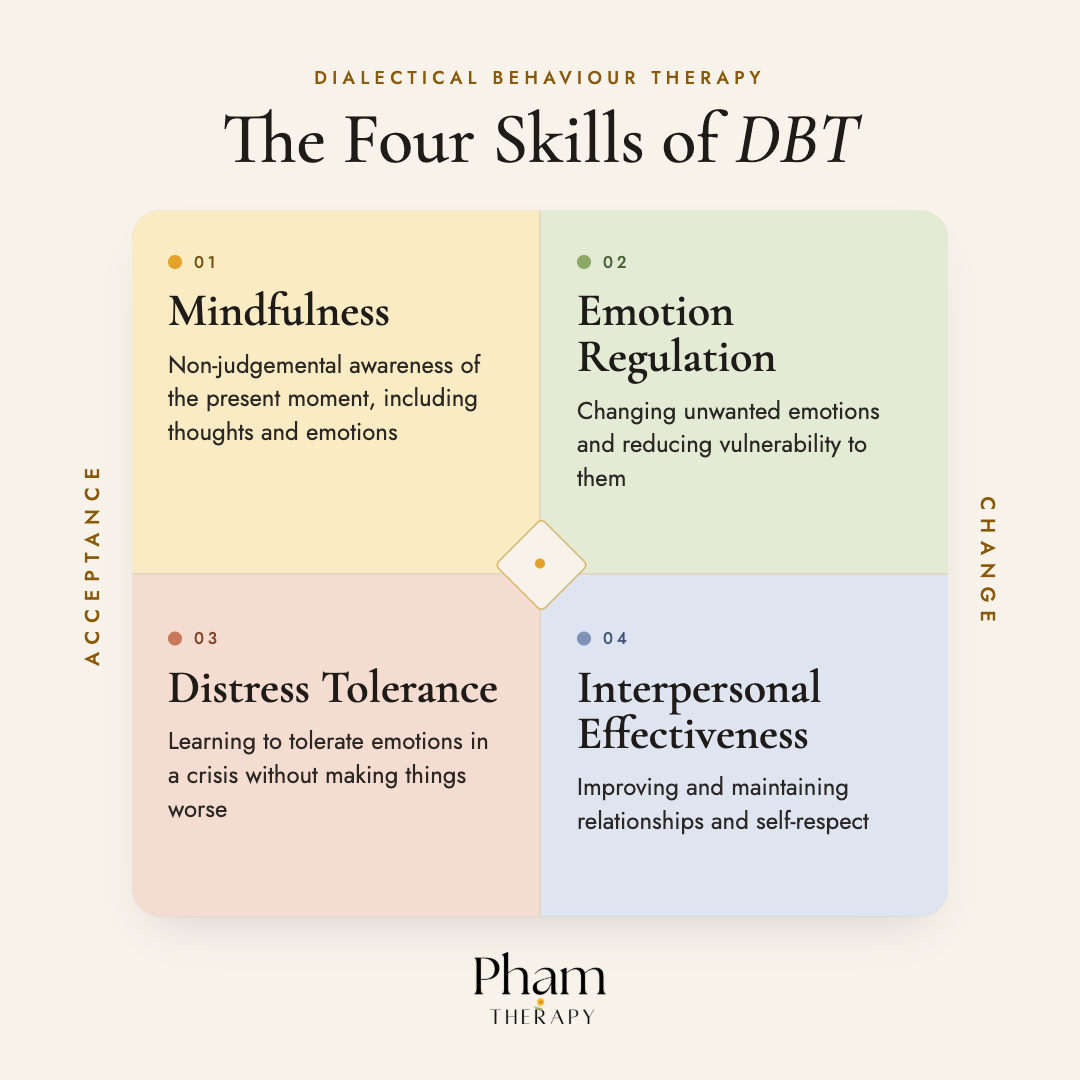
DBT teaches practical skills across four core modules, helping you stay present, manage intense emotions, cope with distress, and navigate relationships.
Mindfulness. Noticing your thoughts, emotions, physical sensations, and surroundings with greater awareness and less judgment. Mindfulness provides a foundation for the other DBT skills, helping you pause and choose how to respond.
Distress tolerance. Getting through moments of intense distress without making things worse. Skills include self-soothing, pausing before reacting, and practising radical acceptance: acknowledging reality as it is, even when it is painful.
Emotion regulation. Understanding and naming your emotions, reducing your vulnerability to emotional overwhelm, and learning ways to shift emotional responses when helpful. Skills include checking the facts and opposite action.
Interpersonal effectiveness. Asking for what you need, setting boundaries, and navigating conflict while balancing your goals, relationships, and self-respect. We also consider how culture and family expectations shape communication, so these skills fit your values and circumstances.
What DBT can help with

DBT and DBT skills can support a range of concerns, including but not limited to:
Emotional dysregulation and coping skills
Self-harm urges
Borderline personality disorder (BPD)
Attachment wounding

Who DBT tends to fit
DBT may be a good fit if you experience intense emotions, feel overwhelmed by distress, or find yourself reacting in ways that affect your relationships or wellbeing.
Dialectical Behaviour Therapy combines emotional understanding with practical skills for managing emotions, coping with difficult moments, setting boundaries, and communicating your needs.
It may appeal to you if you want tools to practice between therapy sessions while making space for your experiences to be understood without judgment.
Dialectical Behaviour Therapy (DBT) is collaborative and structured, balancing acceptance with practical steps toward change. Sessions focus on understanding patterns in your emotions and behaviours, working toward shared goals, and practising skills you can use in everyday life.
Your First DBT Session
The first session is an opportunity for us to begin getting to know you. We may talk about what brought you to therapy, what has been feeling difficult, and what you would like support with.
We may also explore:
Situations where emotions tend to escalate quickly
What happens in your body and mind in those moments
How you have been coping so far, including what helps and what costs you
Relationships that feel strained or important
What you would like to be different
If self-harm or safety concerns are part of what you are experiencing, we will talk about that openly and build a plan together. You do not need to arrive with everything figured out. I may also introduce DBT and explain how it could relate to the concerns you are bringing forward.
What Dialectical Behavioural Therapy sessions look like.
What ongoing DBT sessions may include
DBT offers a structured approach while making room for what is happening in your life. Sessions connect the challenges you face with practical skills and the changes you want to make.
Looking at your week
We may use a simple tracking sheet, called a diary card, to review emotions, urges, behaviours, and skills you practiced between sessions. This helps us notice patterns and identify priorities for our work together.
Understanding difficult moments
We may slow down a difficult moment and explore it step by step: what led up to it, what you thought and felt, how you responded, and what happened afterward. Known as a behaviour chain analysis, this process helps us understand what influenced your response and where skills or other changes could help.
Learning and practicing DBT skills
Together, we choose skills that address the challenges you are facing. Sessions may include mindfulness exercises, role-play, problem-solving, or worksheets, with opportunities to practice and ask questions.
Bringing skills into everyday life
Between sessions, you will be encouraged to practice skills in manageable ways. We then review what helped, what got in the way, and how to adapt your approach.
The Overall Goal of DBT
A central goal of DBT is to build a life that feels worth living to you. Alongside addressing distress and harmful patterns, we work toward the relationships, experiences, and goals that give your life meaning.
Throughout therapy, we review your progress together and address barriers so the work stays focused on your goals.
Work with us
Pham Therapy | Rachel Pham, RCC #23089
3292 Production Way, Suite 501, Burnaby, BC V5A 4R4 (Production Way - University Skytrain Station)
Contact us
Sessions 50 minutes, $155 · 75 minutes, $230
Format In person in Burnaby, or online across British Columbia
Direct billing Available [· ICBC counselling accepted, no referral needed]
Availability No waitlist
Hours Monday and Friday, 8am to 6pm · Wednesday, 9am to 5pm
Commonly Asked Questions
How is DBT different from CBT?
DBT grew out of CBT, so they share a focus on practical skills and changing patterns. DBT adds a strong emphasis on acceptance, validation, and mindfulness, and it focuses specifically on intense emotions, distress, and relationships. Many people benefit from elements of both.
How is DBT different from ACT?
Both use mindfulness and acceptance. ACT focuses on your relationship to difficult thoughts and acting on your values. DBT is more structured and skills-focused, with specific tools for crisis moments and emotional overwhelm. We often draw on both depending on what you need.
Is DBT only for borderline personality disorder?
No. DBT was first developed for people experiencing intense emotions and self-harm, and it is now widely used for eating disorders, trauma, depression, anxiety, and relationship difficulties. Many people use DBT skills without any diagnosis.
Is DBT evidence-based?
Yes. DBT was developed by psychologist Marsha Linehan and has a strong research base, particularly for emotional dysregulation, self-harm, borderline personality disorder, and binge eating and bulimia.
Do you offer DBT skills groups?
We offer DBT-informed individual therapy and teach skills within one-on-one sessions. If a skills group or full DBT program would serve you well, we can help you find one in the Lower Mainland or online.
Do I need a formal diagnosis to start?
No diagnosis required. Many people come to DBT because their emotions feel hard to manage or their relationships keep hitting the same painful patterns.
How long does DBT therapy take?
Comprehensive DBT programs often run six months to a year. DBT-informed individual therapy is more flexible. Some people come for a focused block of sessions to build specific skills, and others stay longer to keep practicing. We check in regularly about what is working.