

In-person| Virtual | Burnaby
Cognitive Behavioural Therapy (CBT)
Table of Content
CBT Model Overview - the CBT Triangle
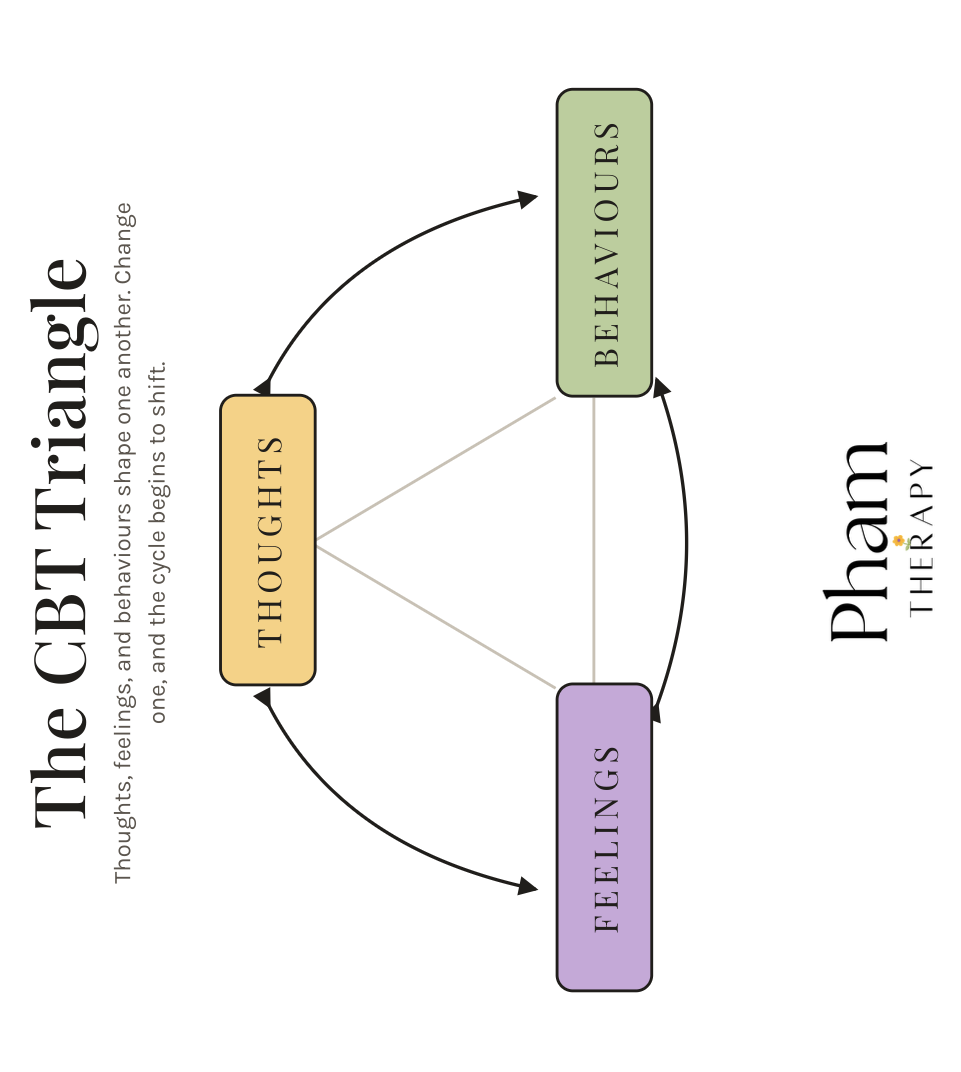
Cognitive behavioural therapy is built around a single working model, usually called the CBT triangle: thoughts, feelings, and behaviours are connected, and each one shapes the other two.
A thought about a situation produces a feeling, the feeling drives a behaviour, and the behaviour reinforces the original thought, whether or not that thought was accurate.
CBT interrupts this cycle through three ways:
Cognitive restructuring focuses on thoughts. Automatic thoughts are examined and tested against the evidence rather than immediately accepted as facts.
Behavioural activation focuses on action. It helps rebuild routines and meaningful activities that have been disrupted by avoidance or low mood, recognizing that action often comes before motivation.
Exposure focuses on avoidance. It involves gradually and systematically approaching feared or avoided situations, allowing new learning to develop through experience.
What CBT can Help with?
CBT can support people experiencing a wide range of emotional and mental health concerns, including but not limited to:
Anxiety Disorders & Panic Attacks
Chronic Stress & Burnout
Depression & Low Mood
Excessive Worry & Rumination
Eating Disorders / Disordered Eating
Insomnia & Disrupted Sleep
Intrusive or Unwanted Thoughts
Life Transitions
and more…
Schedule a Free Consultation to learn if CBT might be helpful for you

CBT Skills You'll Build
CBT builds practical skills you'll continue to use, including the ability to:
Identify patterns in thoughts, emotions, and behaviour
Build coping strategies for anxiety, depression, and stress
Strengthen emotion regulation skills
Reduce avoidance through gradual exposure to challenging situations
Improve communication and address relationship difficulties
Adjust to life transitions, loss, and significant change
Manage the emotional impact of chronic illness or ongoing physical symptoms
Recognize early warning signs and apply relapse prevention strategies
What Cognitive Behavioural Therapy Sessions Look Like
CBT sessions follow a structured, collaborative format guided by your specific goals. Each session looks at how your thoughts, emotions, physical responses, and behaviours connect to the difficulty you're working through.
What Happens in Your First CBT Session?
Your first CBT session focuses on understanding what's brought you to therapy. Your therapist will ask about your current concerns, relevant history, existing coping strategies, daily routines, and what you're hoping to get out of treatment.
By the end of the session, you and your therapist will have started identifying patterns and set clear, realistic therapy goals. Your therapist will also explain how CBT works and answer any questions you have.
What Do Ongoing CBT Sessions Look Like?
Ongoing CBT sessions generally follow six areas:
Check in: review how you've been feeling and what's changed since the last session.
Choose a focus: identify a recent situation, concern, or pattern to explore.
Examine the cycle: look at the thoughts, emotions, physical sensations, and behaviours connected to that situation.
Practice a CBT strategy: apply techniques such as cognitive restructuring, behavioural activation, gradual exposure, or problem-solving.
Apply the learning: choose one manageable exercise to practise before the next session, such as tracking an automatic thought, testing a new response, or returning to an avoided activity.
Review progress: revisit your goals and adjust the plan based on what's working.
Session structure is adapted to your pace, cultural context, and lived experience. Pham Therapy offers in-person CBT in Burnaby and virtual CBT across Vancouver and British Columbia.
Commonly Asked Questions about Cognitive Behavioural Therapy (CBT)
How many sessions does CBT typically take?
CBT is generally shorter-term than open-ended talk therapy. Many people notice meaningful change within eight to twelve sessions, though this depends on what's being addressed.
How effective is CBT?
CBT is one of the most researched forms of psychotherapy, with a strong evidence base for anxiety, depression, and related concerns. Results vary by individual, but the skills it builds are designed to keep helping after treatment ends.
Is CBT covered by MSP or extended health insurance in BC?
MSP doesn't cover sessions with a Registered Clinical Counsellor. Many extended health plans do, though coverage varies, so it's worth checking your specific plan.
Do I need a doctor's referral to see a Registered Clinical Counsellor?
No referral is needed to book directly with a Registered Clinical Counsellor. Some insurance plans have their own requirements for reimbursement, so it's worth confirming with your provider.
Does CBT work as well over video call as in person?
Yes. Research shows virtual CBT produces outcomes comparable to in-person sessions for most concerns, and both formats are available across BC.
How is CBT different from other types of therapy?
CBT is more structured than open-ended talk therapy. Each session works toward a specific goal and typically ends with something concrete to practise.